
Powered By



If you or someone you love is living with immunoglobulin A nephropathy, you’re probably hearing a lot of new kidney-related terms. This condition is also called IgA nephropathy, IgAN, or Berger’s disease. It’s a type of chronic kidney disease, and it can come with a lot of unfamiliar medical words. Some of them might sound intimidating, like glomerulonephritis.
If you’re wondering what glomerulonephritis means or how it’s connected to and different from IgAN, keep reading. In this article, we’ll explain what glomerulonephritis means and how it relates to IgAN, so you can feel more prepared for your next conversation with your doctor.
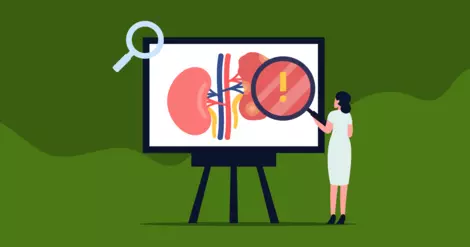
Glomerulonephritis refers to any inflammation in a part of your kidneys called the glomeruli. These tiny filters remove waste products from your blood so you can pee them out in your urine.
It’s caused by a set of kidney diseases that develop because your immune system isn’t working properly. It can also be caused by a reaction to a specific infection, like strep. In autoimmune diseases, the immune system mistakenly attacks healthy parts of the body. Some autoimmune diseases can lead to glomerulonephritis, as can vasculitis (inflammation in your blood vessels), conditions that scar the glomeruli, some forms of cancer, and a few genetic conditions. Occasionally, people who have had stem cell or organ transplants may also experience glomerulonephritis.
IgAN is one of the most common immune-related types of glomerulonephritis. In IgAN, proteins used by your immune system, antibodies called immunoglobulin A, clump together and wind up in your kidneys. The clumps are called immune complexes. Normally, your kidneys would clear these complexes. With IgAN, they can build up in your glomeruli and cause inflammation there. Over time, the glomeruli don’t work as well. When your kidney function goes down, they struggle to filter waste products out of your body, so these may build up in your blood.
IgAN has a lot in common with some of the other forms of glomerulonephritis and less in common with others. The possible causes, symptoms, progression, and treatments of glomerulonephritis in general are a lot broader than for IgAN because IgAN is just a specific type of glomerulonephritis.
As noted above, glomerulonephritis can have a wide variety of causes. If you’re experiencing symptoms, your doctor will need to run blood tests, urine tests, and imaging tests to figure out what’s causing inflammation in your glomeruli. They may also take your medical history, in case you’ve recently had something like strep, which can lead to the condition.
When it comes to IgAN, nephrologists don’t really know what causes it. While they can see the immunoglobulin A proteins building up, they don’t know what process in the body makes them do that. Doctors note that some people seem to develop symptoms of IgAN after they have another infection, like a cold or the flu. However, they still don’t know why the body seems to respond to any particular illness by making changes to the way immunoglobulin A works.
This is different from other forms of glomerulonephritis that come after an infection. In those cases, an infection triggers an immune response that leads to inflammation in the glomeruli. In IgAN, the infection leads to problems with immunoglobulin A, which causes problems in the kidneys.
The symptoms of glomerulonephritis and IgAN overlap, which makes sense because IgAN is a form of glomerulonephritis. Both tend to cause significant changes in your urine.
First of all, both glomerulonephritis and IgAN can cause you to have hematuria (blood in the urine). Your urine may look pink, red, or cola-colored. It happens when blood leaks into the urine through glomeruli that aren’t working well. It’s important to note that you may have blood in your urine even though the urine looks normal. A healthcare provider can run a test to find out if blood is there, even if you can’t see it.
Glomerulonephritis and IgAN also cause you to have proteinuria (protein in your urine). This can make your urine extra foamy. Some foam in your urine is normal, but many people notice their urine is extra frothy when there’s protein in it. You get protein in your urine when it leaks through the glomeruli with waste products.
Other types of glomerulonephritis and IgAN can also cause your body to swell up. This is called edema. The swelling may be most noticeable in your ankles, wrists, feet, and hands. However, it can occur anywhere in your body, including your face and your belly, too. Other symptoms of both conditions include peeing less than expected and experiencing significant fatigue.
In addition to these symptoms that also appear in IgAN, other types of glomerulonephritis can cause both muscle cramps and nausea and/or vomiting. These symptoms may suggest that the inflammation in the glomeruli is caused by something other than IgAN, since they aren’t typically associated with it.
The way that you experience progression of glomerulonephritis will depend on what caused it in the first place. While most types of the condition will progress to do more and more kidney damage until you reach renal failure (kidney failure), this isn’t true of all of them. Acute forms of the condition can resolve if they get the right treatment. Make sure to talk with a healthcare professional right away if you see any signs. They might be able to stop it before you experience enough kidney damage that the condition becomes progressive.
IgAN often progresses over time, but the pace can vary a lot from person to person. Some people go into remission or stay stable for years, while others worsen more quickly. Once it’s diagnosed, it usually doesn’t go away. While some doctors say that IgAN can get better, others say that this is simply a type of the condition that’s progressing very slowly. The best we can say with the knowledge available right now is that some people with IgAN seem to experience the disease stopping or progressing so slowly that they don’t notice it for a long time, while others seem to get worse quickly. More research is needed to understand why people have such different experiences.
There’s no single pattern of progression with IgAN. Instead, your doctor will monitor you to see how fast your kidneys are getting worse.
A person living with glomerulonephritis will likely receive different treatments based on the underlying cause of the condition in their body. Your doctor may need to order a kidney biopsy, where they take a sample of your kidney and examine it in a lab. This allows them to see exactly what’s going on so they can get you the best possible treatment plan.
After that, you might be given drugs to suppress your immune system, like steroids, or drugs designed to protect your kidneys as much as possible. Your doctor may also give you medications to help manage complications that can happen with glomerulonephritis, like hypertension (high blood pressure), protein in your urine, and more. They’ll look at what’s happening in your body and which risk factors you have, then choose medications based on what they find.
Similar to other types of glomerulonephritis, IgAN may be treated with immunosuppressants like steroids, though this isn’t usually the first treatment choice. Instead, your doctor may choose to give you medications that lower your blood pressure and help your body in other ways, knowing that this supports kidneys with IgAN. There are also a couple of treatments that recent studies have shown to be helpful to people with IgAN. Your doctor can tell you if these are right for you and help you start them quickly if you need to.
While there are some overlaps in the treatment of IgAN and other types of glomerulonephritis, other treatments have been studied specifically in IgAN. Many medications used to manage complications are similar because the complications can be the same.
On myIgANteam, people share their experiences with IgAN, get advice, and find support from others who understand.
How did your doctor explain IgA nephropathy to you? Let others know in the comments below.
Get updates directly to your inbox.




 Continue with Facebook
Continue with Email
Continue with Facebook
Continue with Email
Continue with Facebook
Continue with Email
Continue with Facebook
Continue with Email
Become a member to get even more





 Join
Join

 Your Privacy Choices

This is a member-feature!
Sign up for free to view article comments.
We'd love to hear from you! Please share your name and email to post and read comments.
You'll also get the latest articles directly to your inbox.