
Powered By



Chronic kidney diseases, like immunoglobulin A nephropathy (IgAN), are often diagnosed through a series of blood tests, urine tests, or ultrasounds. But in some cases, these tests are inconclusive. To make sure you get an exact diagnosis and proper treatment, your doctor may need to gather more information through a kidney biopsy.
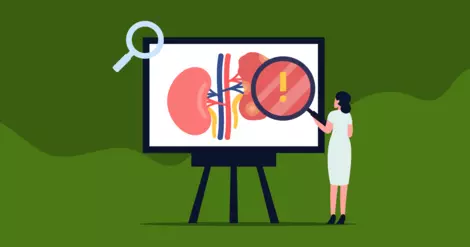
A kidney or renal biopsy is a medical procedure in which a doctor cuts a small amount of tissue — typically about 2 centimeters long — from your kidneys and sends it to a lab for analysis.
Healthcare providers tend to order a kidney biopsy when they notice a large amount of protein in your urine with no obvious cause, deformed red blood cells in your urine, a sudden surge of creatinine in your blood, or an acute kidney injury that isn’t healing properly.
Doctors can perform a kidney biopsy in four ways:
Although a percutaneous biopsy (needle biopsy) is most common, some methods are safer for people who have risk factors like bleeding. Your healthcare provider will choose a biopsy method that’s safe for you.
Because there are several different ways to perform a kidney biopsy, it’s important to talk to your healthcare team about what will happen and how to prepare. Below, we’ll describe the typical procedure for a needle biopsy.
Tell your doctor about all the prescriptions, over-the-counter medications, and supplements you take, as some may increase your risk of bleeding during and after the biopsy. Ask if there are any restrictions on eating or drinking before the biopsy. Find out if it’s an inpatient (hospital recovery) or outpatient (home recovery) procedure so that you can plan accordingly. Someone will need to drive you home if it’s an outpatient procedure.
When it’s time for the biopsy, you’ll be brought into a room and asked to change into a hospital gown. An intravenous (IV) catheter may be placed in the back of your hand or in your arm to easily deliver anesthesia and/or medication. In most cases, you’ll be asked to lie face down on a table for the rest of the procedure. If you have a transplanted kidney, you’ll be asked to lie on your back for better access.
If you’re given general anesthesia, you won’t remember anything else until you wake up in the recovery area. However, some kidney biopsies are performed with a local anesthetic that numbs the area around your kidney but allows you to remain awake. This can help you recover faster. Because it’s important not to move during a biopsy, you may be given a sedative to help you relax.
Next, the skin on your back will be wiped down with a sterilizing liquid. When it’s time to place the biopsy needle, you may be asked to take a deep breath and hold it for about 45 seconds. The healthcare team may use an ultrasound or X-ray to view and guide the needle inside your body. When the needle is in the correct position, a spring-loaded blade cuts a small sample of kidney tissue.
Typically, two tissue samples are taken from the outer part of the kidney. The doctor immediately examines them under a magnifying glass or microscope to make sure they contain enough glomeruli — the kidney’s filtering structures — for proper laboratory analysis. The doctor may need to retrieve additional tissue if there aren’t enough glomeruli present. Current guidelines recommend doctors take no more than five samples to reduce the risk of bleeding.
Once all of the samples have been retrieved, the healthcare team will place a bandage over the punctures and take you to a recovery room. They’ll continue to monitor your heart rate, blood pressure, breathing, and urine until the anesthesia and/or sedation wears off.
You may be instructed to lie on your back when you go home, to watch for persistent blood in your urine, and to avoid strenuous activity for up to two weeks.
Expect to hear from your doctor about the biopsy test results within one week. If the biopsy was urgent, then you may hear about the results within 24 hours.
Kidney biopsies are generally considered safe, but you may be considered a poor candidate for this procedure if you have certain health conditions, such as:
Although most kidney biopsies are performed with a needle, a different biopsy technique may be safer in certain situations. For example, people with high blood pressure or bleeding problems may be better suited for an open biopsy.
Bleeding is the main side effect to watch out for after a kidney biopsy. To reduce the risk of bleeding, follow your recovery instructions. Tell your doctor right away if you notice blood in your urine 24 hours after the biopsy.
Pain, discomfort, or bruising at the biopsy site is another common side effect. Discuss safe pain management options with your healthcare team before and after the biopsy, as some medications may thin your blood and increase the risk of bleeding.
The kidney biopsy is sent to a laboratory for testing and analysis. The tissue will be cut into tiny slivers, placed on a microscope slide, and treated with a variety of dyes and stains that help highlight different structures in the tissue. Specialists at the lab will look for signs of proteins, sugars, fibers, and other components that are associated with specific types of kidney disease.
For example, your doctor may be able to confirm a diagnosis of IgAN if they find certain immune system proteins in your tissue samples.
The lab specialists will also use powerful microscopes to magnify the tissues and look for abnormal activity. In IgAN, there may be signs of scarring, inflammation, or an unusual number of cells.
In rare cases, kidney biopsies can lead to kidney infections, urinary tract infections, or other types of infection. Call your doctor or seek immediate medical care if you notice any of the following symptoms:
Talk to your doctor if you have any other concerns about a kidney biopsy, even if you haven’t had the procedure yet. They can give you specific information about the kind of biopsy you’ll receive, what to expect in terms of anesthesia or sedation, and your unique risk factors. Being well-informed may give you greater peace of mind going into the procedure.
On myIgANteam, people share their experiences with IgA nephropathy, get advice, and find support from others who understand.
Have you had a kidney biopsy? What advice do you have for people who may need one? Let others know in the comments below.
Get updates directly to your inbox.




 Continue with Facebook
Continue with Email
Continue with Facebook
Continue with Email
Continue with Facebook
Continue with Email
Continue with Facebook
Continue with Email
Become a member to get even more





 Join
Join

 Your Privacy Choices

This is a member-feature!
Sign up for free to view article comments.
I am to scared to get biopsy. I know it will hurt terribly
We'd love to hear from you! Please share your name and email to post and read comments.
You'll also get the latest articles directly to your inbox.